Beyond Connectivity: Reflections on Africa's Digital Future from AfIGF 2026.
The conversations shaping Africa’s digital future must go beyond access to consider meaningful participation, safety, governance and the people technology is meant to serve.
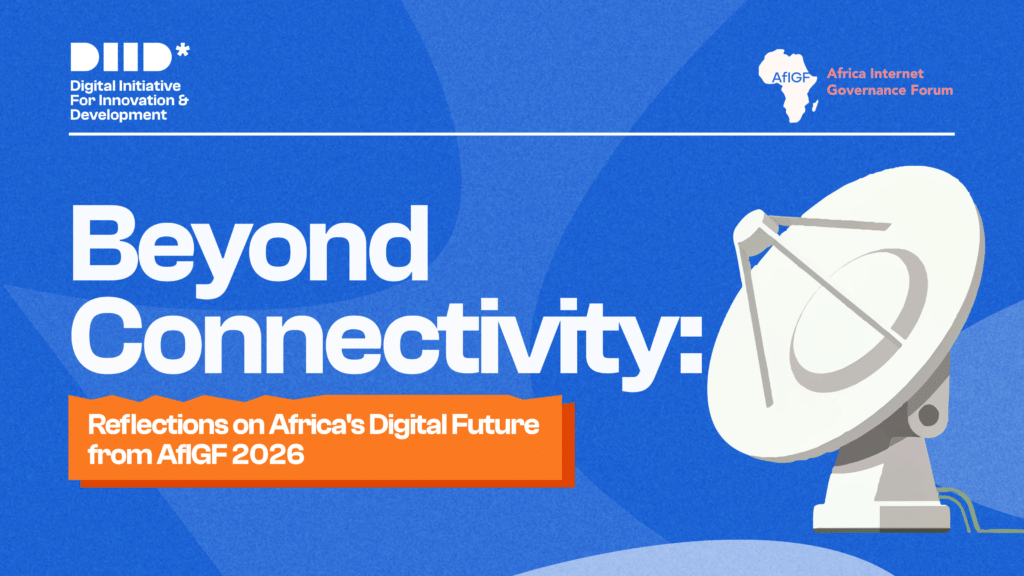
From the 2nd to the 5th of November 2026, The Digital Initiative for Innovation and Development (DIID) joined stakeholders from across Africa’s internet governance community in Accra, Ghana, for the Africa Internet Governance Forum (AfIGF) 2026.
This year’s Forum was held under the theme Advancing Africa’s Digital Future Through Innovation, Inclusion, and Trust. The Forum brought together civil society organisations, policymakers, researchers, technology professionals and other stakeholders to examine the issues shaping the continent’s digital future.
DIID was represented by Programs and Policy Associate, Aishat Omolade Lawal and Communications and Creative Associate, Oluwadunsin Ogunsemoyin.
Across the sessions, several conversations stood out, particularly those examining the relationship between digital access, meaningful inclusion, online safety and governance.
Here are some of the reflections we took away.
1. Meaningful Connectivity Requires More Than Infrastructure
One of the recurring questions at the forum was what it means to be meaningfully connected.
During the session, Beyond Access: Ensuring Meaningful Connectivity in Underserved Communities, Dr. Maud Adjeley Ashong Elliot and Dickson Anane explored the difference between the coverage gap and the capacity gap.
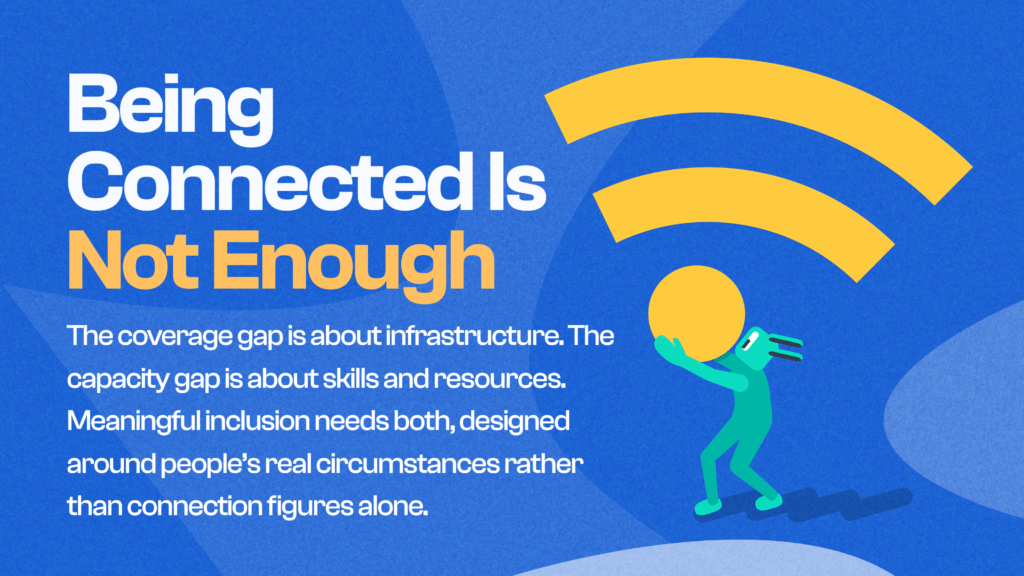
The coverage gap describes communities that lack the infrastructure needed to access the internet. The capacity gap, however, concerns people who may already have connectivity but lack the skills, knowledge or resources to use it effectively.
This distinction is important.
Expanding internet coverage remains essential, particularly in underserved communities. However, connectivity alone does not guarantee meaningful participation in the digital economy or society.
Digital literacy, education, local needs and the ability to use digital tools productively must also inform digital inclusion programmes.
The discussion reinforced the importance of designing interventions around people and their circumstances, rather than measuring progress solely through infrastructure and connection figures.
2. Online Safety Must Be Built In, Not Added Afterwards
The session Beyond Blocking: Building Safety by Design for African Children in the Age of AI, facilitated by the Ghana Internet Safety Foundation (GISF) examined the need for a more proactive approach to online safety.
A key point from the discussion was that safety should be considered during the design and development of digital platforms, rather than addressed only after harm has occurred.
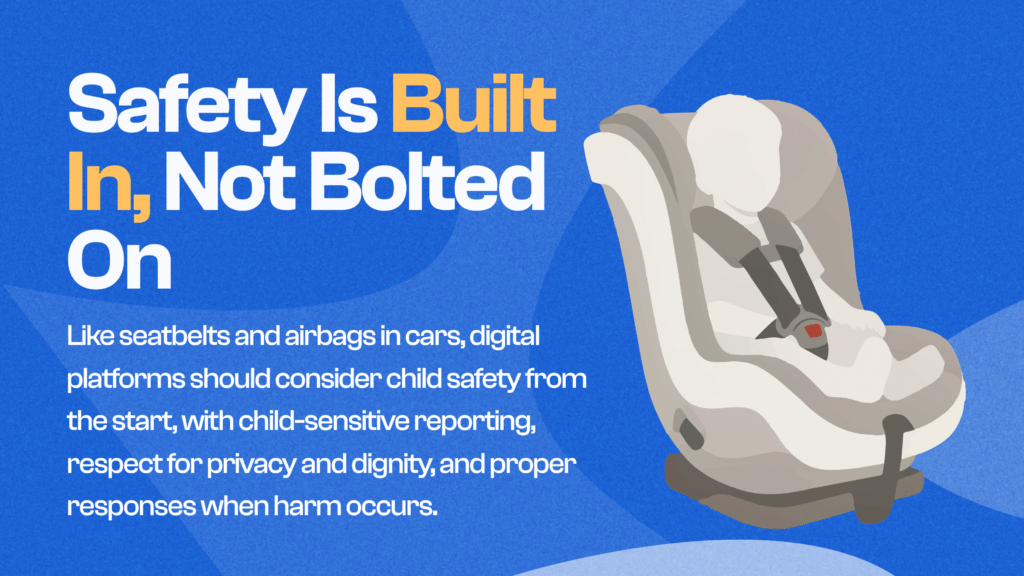
Fredrica Amoako-Atta, of the GISF offered a useful illustration with the analogy of safety features in cars. Seatbelts and airbags are incorporated into vehicles before they are used. Digital platforms should similarly consider safety from the beginning.
For children, this includes more than removing harmful content or blocking accounts. It also requires accessible, child-sensitive reporting mechanisms, respect for privacy and dignity, and appropriate responses when children experience harm online.
As digital platforms and AI-enabled services become more integrated into everyday life, safety-by-design approaches will remain important to protecting children’s rights and wellbeing.
3. Community Connectivity Projects Must Consider How People Use the Internet
The Internet Society Community Grant Programs Impact Session offered a practical illustration of the opportunities and challenges involved in expanding connectivity.
Representatives from Togo and Ghana shared experiences from community projects supported through the grant programme.
The presentation from Togo described efforts to bring internet connectivity to communities with limited access. The project included public Wi-Fi access points in community spaces and arrangements to provide the electricity needed to operate them.
However, the presentation also highlighted a challenge: some young people began accessing adult content when connectivity became available, underscoring the importance of digital literacy and guidance.
This example brought the conversation back to meaningful connectivity.
Providing access is an important first step, but communities also need the knowledge and support to navigate the internet safely and make productive use of it.
Connectivity projects should therefore consider digital education and awareness alongside infrastructure deployment.
4. Governance Requires Evidence, Institutions and Implementation
The forum also explored the challenges of translating governance principles and policy recommendations into practical outcomes.
In The Missing Middle of Data Governance: Institutions, Financing and Implementation in Africa, the discussion considered the importance of understanding local contexts, consulting stakeholders and developing recommendations that respond to the realities of the communities and institutions expected to implement them.
The broader lesson is that policy development cannot end with recommendations.
Governance frameworks need institutions with the capacity to implement them, resources to support their work and practical pathways for translating policy into action.
This is particularly relevant to African digital governance, where recommendations must account for different national contexts and institutional capacities.
5. African AI Governance Needs Evidence and Collaboration
Artificial intelligence featured in several conversations, including Fostering Digital Pan-Africanism in AI Governance through Evidence and Action, hosted by participants from the University of Bremen.
The discussion considered why Africa needs an evidence base that reflects its own circumstances and priorities.
Questions about technological dependence, digital colonialism and sovereignty also featured in the conversation. These issues raise important considerations about who develops, controls and benefits from the technologies increasingly shaping African societies.
Another question concerned the relationship between national AI governance frameworks and continental cooperation.
While countries need to strengthen their domestic institutions and governance structures, many AI-related challenges extend beyond national borders. Collaboration can support knowledge exchange, shared learning and more coordinated responses.
The challenge is to build national capacity while creating opportunities for meaningful African cooperation.
Looking Beyond the Forum
AfIGF 2026 reinforced the point that Africa’s digital future cannot be shaped solely by foreign interests, nor can it end at connectivity and innovation alone.
It also depends on whether people can participate meaningfully, whether digital environments respect their rights, whether institutions can govern emerging technologies effectively and whether African countries can shape the decisions that affect their digital futures.
For DIID, these conversations connect directly to our work across digital rights, online safety, digital inclusion and tech- governance.
They also reinforce the importance of research, public engagement and collaboration in developing responses to the challenges facing Africa’s digital environment.
As we reflect on the discussions in Accra, we look forward to building on the connections made at the forum, continuing these conversations and exploring opportunities to work with others towards a more inclusive, safe and accountable digital future for Africa.