

Child Online Safety Legislation Across Africa: Explore DIID’s New Interactive Map
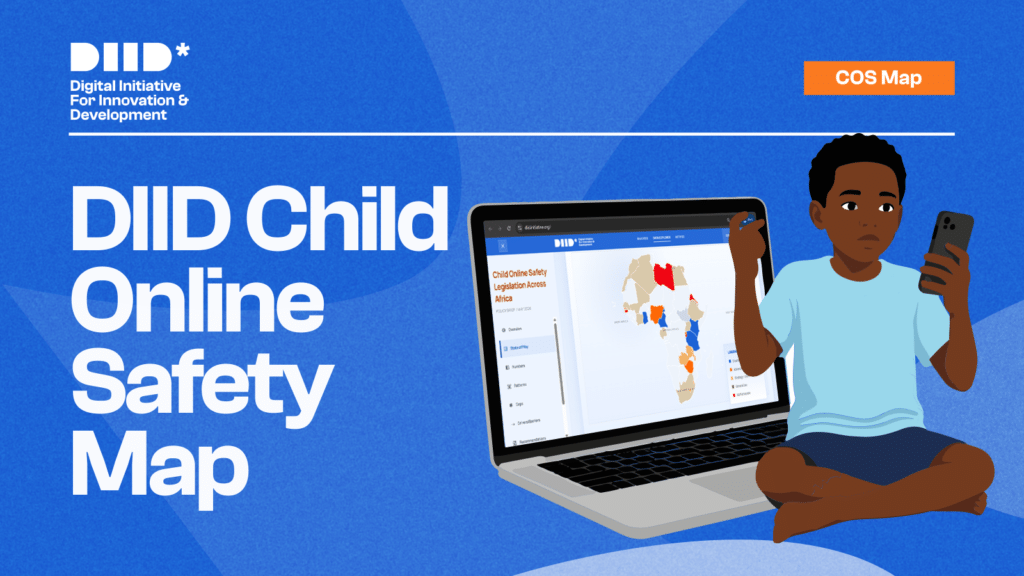
Children are spending more time online, but the laws designed to protect them do not look the same across Africa.
Some countries have enacted dedicated child online safety legislation or binding regulatory frameworks. Others rely on broader laws covering areas such as child protection, data protection, cybercrime or online harms. In many countries, significant gaps remain.
Understanding these differences is important for policymakers, researchers, civil society organisations, technology companies, parents and anyone working to make digital spaces safer for children.
That is why the Digital Initiative for Innovation and Development (DIID) has developed the Interactive Map: Child Online Safety Legislation Across Africa.
The map provides a comparative view of the legal and regulatory landscape across all 54 African countries, making it easier to see what frameworks exist, what they cover, and where gaps remain.
Explore the map
The interactive map allows users to explore child online safety legislation country by country and understand how different jurisdictions are responding to risks children face online.
These risks include exposure to harmful content, cyberbullying, online grooming, sexual exploitation, privacy violations and other forms of harm associated with children’s use of digital platforms.
Explore the Interactive Child Online Safety Map →
What does the map cover?
The map brings together DIID’s research on national laws and regulatory frameworks relevant to child online safety across Africa.
For each country, users can explore information on the legal and policy instruments relevant to protecting children online, including dedicated child online safety frameworks where they exist and broader legislation that addresses specific aspects of online safety.
The resource is designed to make a complex and fragmented legal landscape easier to understand and compare.
It can also serve as a starting point for further research, policy discussions and advocacy around how African countries can strengthen protections for children online while respecting their rights and opportunities to participate in digital life.
Access the research behind the map
The interactive map is accompanied by detailed research materials documenting the legal landscape across the continent.
You can access the PDFs below:
Full country-by-country mapping (PDF): Download here
Policy analysis and recommendations (PDF): Read here
These materials provide additional detail on the laws, policies and regulatory instruments captured in the interactive map.
A resource for an ongoing conversation
The map is not intended to suggest that the existence of a law automatically means children are safe online.
Laws are only one part of the picture. Their scope, implementation, enforcement and interaction with platforms, families, schools and other institutions also matter.
The map instead provides a way to understand where legal frameworks currently stand across the continent and to identify areas that may require further attention.
As technology changes and governments continue to develop new approaches to child online safety, this landscape will continue to evolve.
DIID will continue to use research, public engagement and policy dialogue to examine what effective child online safety can look like in Africa.
Explore the Interactive Child Online Safety Map:
If you work on child rights, digital rights, technology policy, online safety or digital governance, we invite you to explore the resource and use it to inform further research and conversation around child online safety across Africa.
Stay in the loop
If you want more of this kind of work in your inbox, subscribe to our newsletter and follow DIID on social media for updates on the events, policies and regulations shaping Africa’s tech future.